

The upside of interruption
When good habits are counter productive what you need is a puppy, sorry, I mean to shake things up a little. How controlled chaos can lead to writing resilience.



Hey there, Bec here
I’m landing in your inbox a day late. Normal service has been interrupted by our new puppy Nellie - she’s an absolute bless poppet, but also a nightmare for my neatly organised routines. The chaos of the last few days has got me thinking about interruption.
Like many writers, I crave control over my writing environment, which means minimising distraction and interruptions. However, that quest for a perfect writing environment can be counterproductive. In our book Written we shared George R. R. Martin’s attempt to manage the distractions that came from the success of Game of Thrones. To counter constant interruption he moved to an isolated writing cabin with a team that catered to his every need and who silently removed all friction from his life.1
The downside of good routines
In theory, good writing routines minimise effort and the expenditure of limited willpower. But the problem with habits is habituation. They become boring. Or as the psychologists say: the diminished effectiveness of a stimulus in eliciting a response, following repeated exposure to the stimulus.2
The more perfect our writing environment, the less likely it is to lead to good writing. As George R. R. Martin found. On his blog, he complained that his life was boring, going so far as to say: ‘Truth be told, I hardly can be said to have a life.’
Shake things up
One of the reason I think that writing tips and hacks work (in the short term at least) is that they introduce novelty into our writing. When we run our 7-day writing sprint, Saturday’s theme is to shake it up. Shaking things up can be as simple as changing where you write - you could go to out to a cafe or move your chair to the other side of your desk.
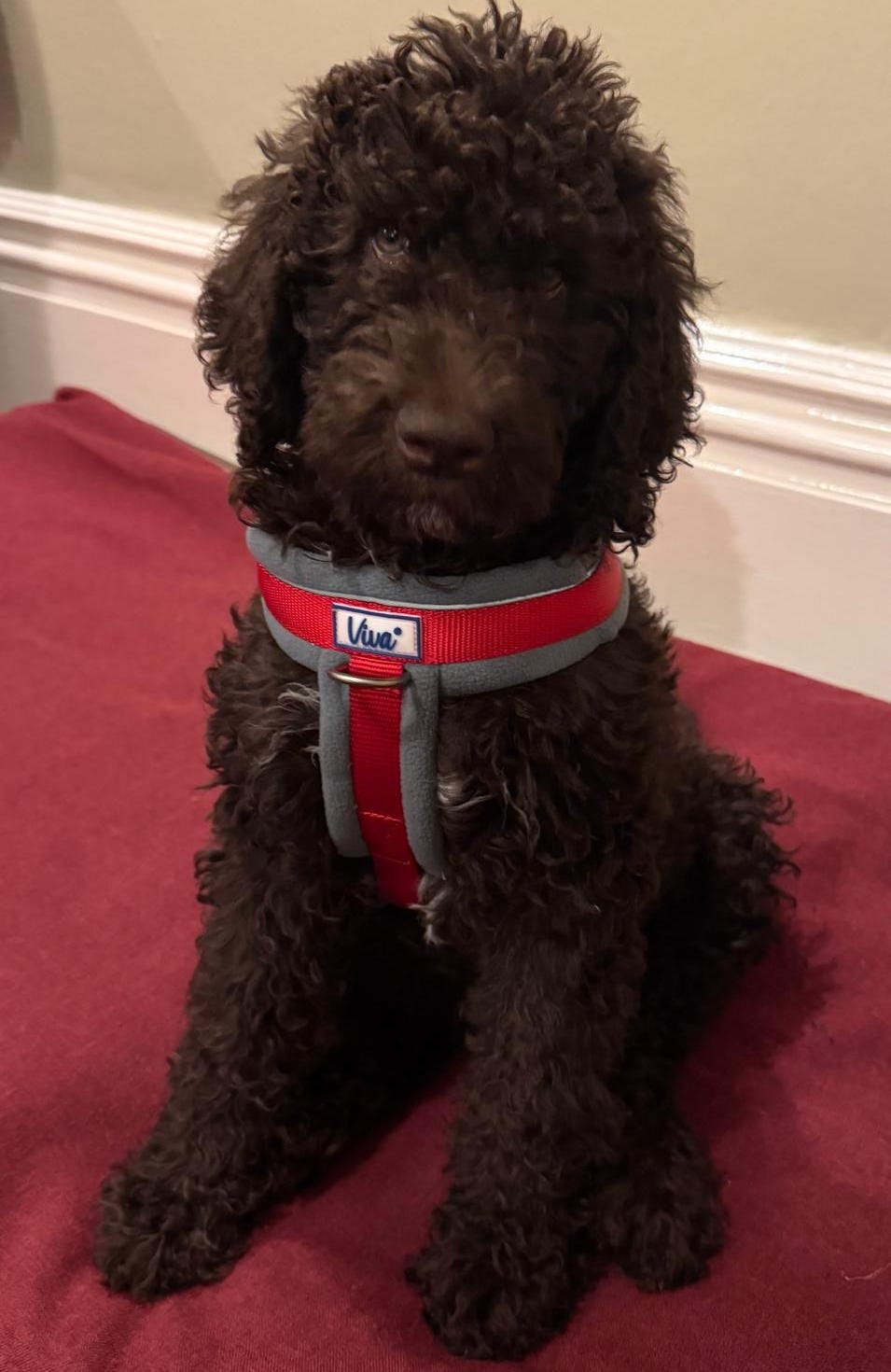
Having a puppy has certainly shaken up my routines, from setting my alarm for 2am toilet training, trying to concentrate while she cries for attention, to writing in a notebook while I ‘supervise’ play (OK, I’ll admit it’s just fun to watch a pup wrestle a purple llama). I’m aware of my privilege here, I have a lot of my control over my day-to-day and am choosing to disrupt things. But there does seem to be an upside of interruption even when it is not a choice.
In my decades working with writers, researching writing habits, and speaking to many thousands about their actual writing practice, I have found that some of the most determined, resilient, and dare I say productive writers are those with caring and parental responsibilities. Their schedules are constantly disrupted and while there is no getting away from how exhausting and how damn hard it is to juggle responsibility and uncertainty, there is an argument against our quest for ease.
Psychologist Adam Alter wrote that experiencing disruption, like any hardship, takes a physiological toll, raising heart rate and blood pressure and depleting limited cognitive resources. But in reviewing research that studied disfluency particularly in young people, he found that:
‘Students who are encouraged to overcome the artificial cognitive roadblocks imposed by disfluent experiences might, in time, become inoculated against greater mental challenges in the same way that a vaccination inoculates children against disease. According to this hypothesis, students might develop grit or perseverance as their cognitive muscles are strengthened by repeated exposure to challenging cognitive tasks.’3
An upside to friction
Introducing friction into our writing lives, while stressful in the short term, could lead to long-term benefits. Which brings me back to Nellie, my cute cognitive roadblock.
I had planned to write a longer review of Peter Elbow’s 1973 book Writing Without Teachers and share a freewriting exercise of his that I did last week. The floof has depleted my attention too much to write that more considered piece, but I hope to share next week. In the meantime, if you are keen to read more about freewriting, here is a post I wrote a couple of years back.

The upsides are many, for a start my life is anything but boring. While my writing sessions are shorter, I’m adapting to when and how I write, I am doing more spontaneous sessions and freewriting. Nellie brings joy, she inspired this post and if I attach a photo of her to an email, I get a faster and more enthusiastic reply.
Keep going, Bec
P.S. If you liked this article please consider supporting us by subscribing or upgrading to a paid membership. When you do, you can join our 7-Day Writing Sprints and goal setting webinars across the year.
Alternatively, we’d be grateful for any likes, shares or comments you have.
In Chapter 6 of Written, we wrote this about George R. R. Martin:
‘Because the books and the show are so popular, I have interviews to do constantly. I have travel plans constantly,’ he admitted at a conference. ‘It’s like suddenly I get invited to travel to South Africa or Dubai, and who’s passing up a free trip to Dubai?’ Exciting opportunities indeed, but ones that lead to delay, as Martin explains: ‘I don’t write when I travel. I don’t write in hotel rooms. I don’t write on airplanes. I really have to be in my own house undisturbed to write. Through most of my life nobody did bother me, but now everyone bothers me every day.’ Martin’s current radical solution is to move lock, stock and barrel to an isolated hilltop writing cabin at an undisclosed location. Ably helped by a small army of minions (his word), Martin’s every need is catered for and every potential writing distraction, interruption or mild irritation is deftly, silently removed by a minion before it ever disturbs him. There, Martin complains his life is very boring, ‘Truth be told, I hardly can be said to have a life,’ he writes on his blog.
Definition from The APA Dictionary of Psychology
The Benefits of Cognitive Disfluency. Alter, Adam L. Current Directions in Psychological Science, vol. 22, no. 6, 2013, pp. 437–42.

Good reminder. I used to make use of "time confetti), but lately have not. As a result, I haven't gotten much writing done at all for weeks. Going back to keeping my small notebook with me. I get ideas, but by the time I sit down to my PC, they have disappeared :-)