

The liar in your head
Research reveals why we underestimate what we can do - and why creative work makes it far worse


Hi writing friends, it’s Chris here.
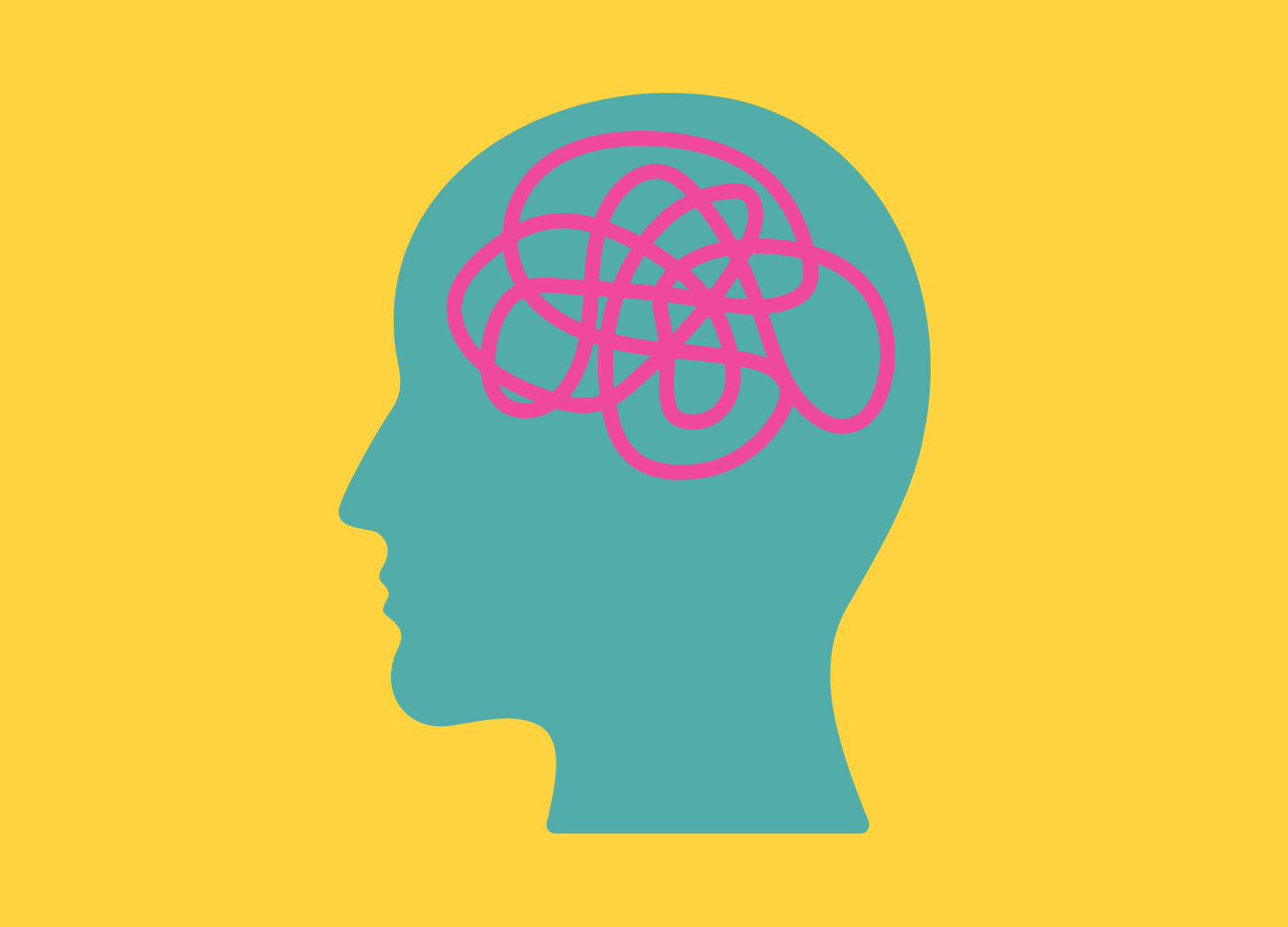
We’ve all heard it. You’ve been writing something, working on something or trying to solve a thorny problem of some kind and a voice pipes up: Am I just wasting my time? Maybe it will never work. Perhaps I’ve had all my good ideas. It’s that moment when keeping going feels a bit, well… pointless.
I’ve had that feeling a lot recently, somewhere around page twelve of a thirteen-page proposal. Don’t worry, this isn’t another existential proposal-angst post - but I know that moment well. It’s the point at which a feeling can morph into an action. We walk away, we stop or we decide to spend our precious time on the planet doing something else, maybe something easier.
At the time, the voice sounds quite reasonable and sensible. Reassuring, even. But it’s almost always wrong.
Brian Lucas and Loran Nordgren are two researchers at Northwestern University - I’ve written about their work before. They’ve spent years studying why people persist on creative tasks, and why they stop. Across multiple studies, they found the same pattern again and again: people dramatically underestimate how much more they can produce if they continue. And when people did keep going, the ideas that came later were often the most original ones.
The problem, they conclude, isn’t that we lack ideas. It’s that we stop before we reach them. I think their research has four key insights:
1. We think we’re running out when we’re just getting started
In one study, participants were asked to generate as many Thanksgiving-themed food and drink ideas as they could in ten minutes. Afterwards, they were asked to predict how many more they could come up with if given another ten minutes.
On average, people predicted around ten more ideas. They actually generated fifteen.
More strikingly, when independent judges rated the ideas, the second-round suggestions were significantly more original than the first. The ideas we never reach - the ones that sit just beyond the point where we decide we’re done - may be the best ones we had. What this means is that when we stop too early, we don’t just lose quantity. We lose quality.
2. Creative work makes us particularly bad at judging ourselves
This underestimation happens across many kinds of tasks, but the research finds it is far stronger in creative ones. When people generate unusual uses for everyday objects, write slogans, or solve open-ended problems, they misjudge their remaining capacity far more than when doing structured tasks like maths calculations or word searches.
There is something about creative thinking that distorts our sense of ourselves and what we’re capable of. The researchers say that part of this comes from how creative work can feel. The fact that ideas arrive slowly and that reaching these ideas happens in an often tortuous, non-linear, trial-and-error type way. Progress is difficult to measure. You try something and it fails. You try again. It might fail again.
This feeling is easy to misinterpret. In structured, analytical tasks - say, doing long division or working through a spreadsheet - difficulty often signals genuine limitation or progress. It signals something. In creative tasks, discomfort often signals nothing: just hard, unpleasant murkiness.
The researchers find that even the label ‘creative’ makes a difference. In one experiment, two groups were given exactly the same task - generating recipe ideas using peanut butter. One group was told to produce ‘creative ideas’ while the other was told to produce ordinary ones. The group told to be ‘creative’ underestimated themselves far more. Nothing about the task had changed. Only the meaning attached to it.
3. Experience doesn’t protect you
You might expect this misjudgement to fade with experience. It doesn’t - sorry! In one study, the researchers recruited comedy pros performing at a major sketch comedy festival. These were heckle-hardened standups with years of experience generating ideas under pressure. They underestimated themselves in exactly the same way.
We assume that confidence might arrive when you become good enough, or that one day the work will feel clearer or more certain. But creative work rarely feels that way, even for people with years of experience. The doubt doesn’t disappear - it just becomes more normal.
4. We make real decisions based on a false signal
In the final study, participants were paid money for every fundraising idea they generated for a charity. After an initial round, they were asked whether they wanted to continue. If so, the researchers said, they’d have to pay a small fee - a fee far smaller than the likely return if they continued. Half the participants walked away because they felt they couldn’t continue. A feeling led to them missing out on cold hard cash they could have made.
This is the thing about creative work and how we respond to it. Feelings lead to actions. We close the document. We abandon the draft. We pivot and change direction. We assume we can’t do it - so we don’t. But the moral to this particular research paper is that you can - well, more accurately; you probably can.
I’m not suggesting that every time those feelings arise or that voice pops into your head you should ignore it and push on indefinitely. That’s not the kind of advice I give. You have to know when to quit too. But what this research suggests to me is that the fact that the work feels shitty doesn’t necessarily mean you should stop or change direction either - in fact it might not mean anything.
The voice telling you to chuck in the towel can often speak with clarity and authority. But very often, it is simply the sound of the work getting a bit more interesting.
Keep writing,
Chris
P.S. If you liked this article please consider supporting us by subscribing or upgrading to a paid membership. When you do, you can join our 7-Day Writing Sprints and goal setting webinars across the year.
Alternatively, we’d be grateful for any likes, shares or comments you have.

Very timely, indeed! Been stalled for weeks thinking I might as well give up after five years of writing with the muddled middle still there. And maybe a muddled beginning and ending. So taking a break. BUT with the research you've summarized, I will go back and not give up completely. Not sure when, but sooner than later.Thanks for the post.
This really resonated with me as I struggle to complete editing my novel. Imposter syndrome is real!